
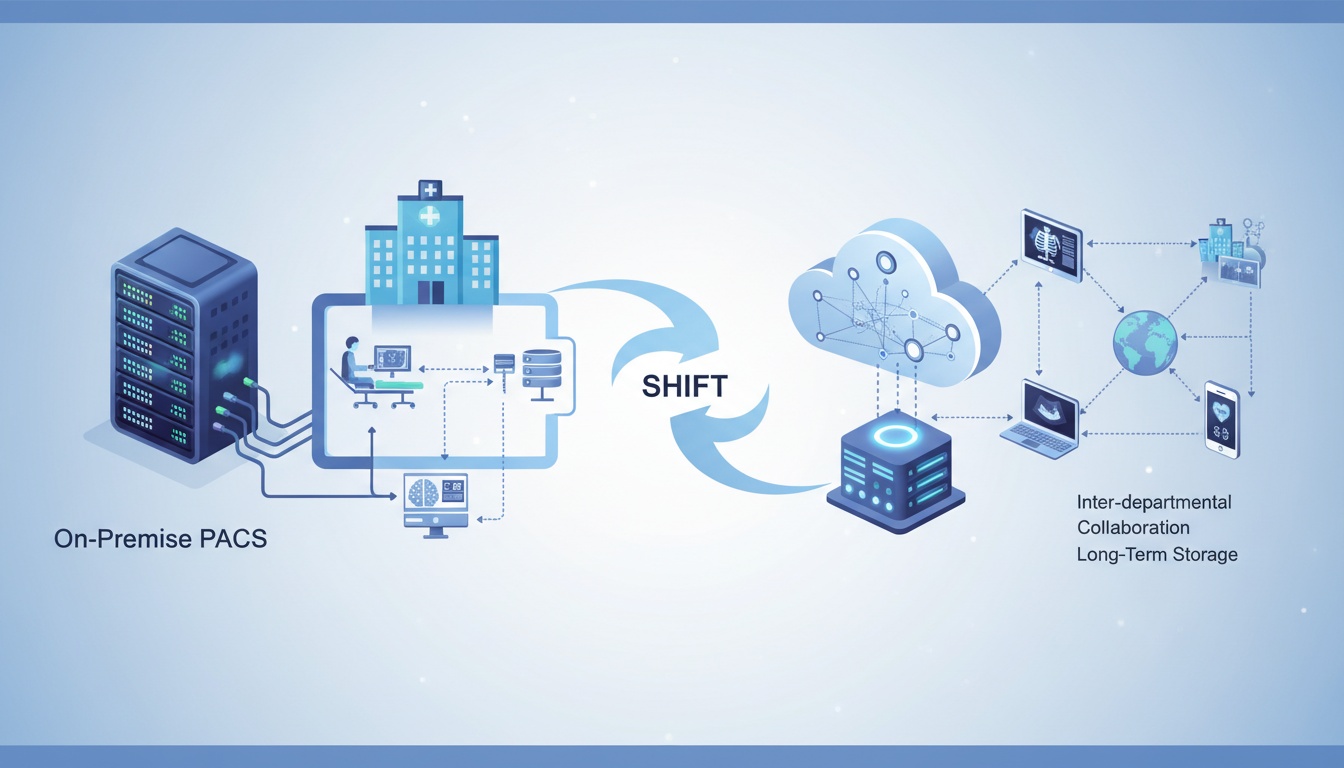
The imaging infrastructure in healthcare has been developing in the last twenty years at a fast pace. Since the changing volumes of diagnostic imaging are the common trends across the healthcare systems, there is a shift in the retaining, maintaining and transferring the medical images technology which has become an essential part of the clinical processes. Picture Archiving and Communication Systems (PACS) are at the center of this infrastructure because they allow healthcare professionals to retrieve radiology studies, inter-departmental collaboration, and long-term storage of diagnostic imaging data.
Conventionally, PACS were implemented on on-premise infrastructure within a hospital or an imaging facility. These systems were based on locally managed servers, storage array, network devices to manage imaging work flows. Being functional over several years, on-premise architectures demand massive hardware investments, maintenance, and IT specialized expertise to run and be reliable.
The advent of cloud computing has brought about a new paradigm of medical imaging infrastructure management. PACS cloud solutions enable healthcare institutions to keep imaging data in safe cloud-based installations and clinicians have access to web-based studies using recent DICOM viewers. Such a solution can simplify the infrastructure and allow healthcare practitioners to view the imaging data of multiple places without necessarily using in-premises networks.
Nevertheless, the cloud PACS is not necessarily the ideal solution to all healthcare organizations. Various operational needs, regulatory as well as technical constraints are involved in different clinical settings. Considering that not all organizations gain identical advantages in proceeding with a cloud-based PACS would allow healthcare leaders to choose an option that fits well into their operational workflow, scalability, long-term infrastructure development goals.
• The Cloud-based Pacs Stores Medical Imaging Information In Safe Cloud-based Infrastructure Rather Than The Use Of Local Servers Within Hospitals And Clinics.
• Cloud Pacs Is Found To Suit Healthcare Organizations That Are Limited In It Infrastructure Since Infrastructure Maintenance And System Upgrades Lie With The Provider.
• Clouds Would Enable Multi-location Healthcare Networks To Centralize Access To Imaging With Improved Collaboration Among Facilities And Clinicians.
• Cloud-accessible Imaging Systems Which Allow Teleradiology Services Are Important In Remote Radiology Processes Involving Teleradiology Services In Order To Facilitate Off-site Diagnostic Reports.
• Prior To The Implementation Of Cloud Pacs, Organizations Ought To Critically Assess Security Compliance, Integration With Clinical Systems, Network Stability And Long Run Operations Cost.
A Picture Archiving and Communication System (PACS) is a specialized medical imaging system, which is employed to store, retrieve, share, and administer diagnostic images that includes X-rays, CT scans, MRI studies and ultrasound studies. PACS systems are tightly coupled with the radiology workflow, being integrated with imaging modalities, radiology information systems (RIS) and electronic health records (EHR).
Traditional PACS settings involve server installation on servers within the medical facility. These servers contain huge amount of imaging information and also makes the data available to the clinician via local work stations or in-house networks. Although this architecture means complete control over the system, it also involves healthcare organizations taking care of the hardware upgrades, expansion of storage, and cybersecurity protection as well as the disaster recovery plan.
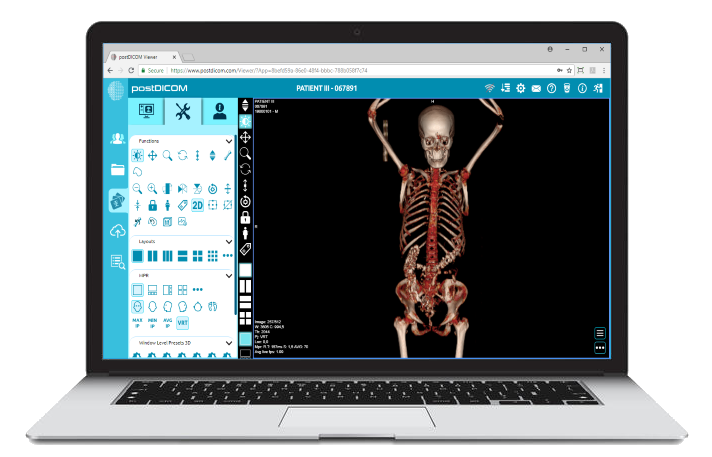
The PACS in the cloud applies a new infrastructure model. The PACS provider keeps medical images in cloud data centers that are securely storing imaging data instead of the local hardware. This imaging data in healthcare institutions is being accessed via encrypted internet access with a web-based DICOM viewer or built-in clinical system. This enables clinicians to access diagnostic images at different sites without having to have local specialized installations.
Scalability is another major benefit of cloud PACS architecture. The amount of medical imaging data is only increasing with the improvements in imaging capabilities and increased medical imaging services being offered by the healthcare systems. Cloud storage environment can enable healthcare providers to increase imaging archive production without upgrading the physical storage equipments. Consequently, cloud PACS would allow more flexibility to organizations with such long-term imaging expected.
Although these benefits exist, cloud PACS implementation needs the thorough consideration of the performance of the network, regulatory performance, and integration with the current clinical systems. Healthcare organizations need to make sure that cloud infrastructure is highly secure against healthcare data protection and retain hale and hearty access to imaging investigations by clinicians.
Cloud PACS solutions may provide significant operational benefits, though not every healthcare setting will have the same benefit. Some categories of organizations tend to enjoy much more of cloud-based imaging infrastructure owing to the nature of the organization or doctors, IT capacity, or workflow.
The knowledge of these environments also allows healthcare decision makers to determine whether a cloud PACS strategy is in line with their organizations technical and operational priorities.
The small healthcare and independent diagnostic centers have a difficulty in implementing conventional PACS infrastructure. The imaging systems that are on-site entail initial costs of investment in servers, storage devices and network provision. These costs may act as obstacles to implementing sophisticated imaging management systems in smaller organizations that have small budgets.
Cloud PACS saves a lot of hardware investment as compared to hardware. Clinics no longer need to purchase and maintain physical infrastructure as they can deploy imaging systems using cloud subscriptions which in increase or decrease with usage. This enables smaller healthcare providers to have access to the level of imaging of an enterprise without owning their own data centers.
Moreover, cloud PACS systems will be able to ease the implementation of new practices or new diagnosed centers. Since volumes of patients have been increasing, cloud services can be used to add storage and capacity to the system without significant changes to the infrastructure.
Numerous healthcare companies are run without huge IT departments within their framework, with imaging infrastructure. The operation of the traditional PACS setting would demand technical proficiency in server management, database administration, cybersecurity, and network optimization. Smaller facilities might have difficulty keeping these capabilities within the facility.
Cloud PACS systems lessen this operational load by delegating numerous infrastructure roles to the service provider. The vendor normally handles system updates, security patches, and storage expansion as well as system monitoring, which leaves the healthcare providers with less time and concentration on the clinical workflows instead of technology maintenance.
This model may be especially useful to outpatient imaging centers, specialty clinics, and community healthcare providers that have no elaborate internal IT resources, but need to have ready access to imaging.
Healthcare networks which operate across multiple facilities often struggle attempting to centralize imaging data. Traditional PACS deployments tend to store the imaging data within a single facility, and this can create complications when trying to work across facilities.
Cloud based PACS solutions help to establish a centralised imaging repository that can be accessed by different clinical sites. Imaging studies can be reviewed by radiologists, specialists and referring physicians regardless of where the examination was performed. This centralized architecture provides a significant benefit to collaboration between hospitals, outpatient imaging centers, and specialty clinics within the same healthcare network.
Teleradiology services greatly depend on secure remote access to imaging studies. Radiologists who are providing off-site diagnostic reporting need to quickly and reliably retrieve imaging data from multiple healthcare facilities.
Cloud-based PACS platforms are used in support of this model by supporting secure internet-based access to imaging data through web-based DICOM viewers. Radiologists can reach studies from home offices or remote reading centers or other clinical sites without needing complicated VPN configurations.
 - Created by PostDICOM.jpg)
Medical imaging data is one of the most valuable digital assets of healthcare organizations. Loss of imaging archives to hardware failures, natural disasters, or cyber incidents can have a major impact on clinical operations.
Cloud PACS platforms typically feature some form of built-in redundancy and disaster recovery measures that are enabled to protect imaging data. Imaging studies can be replicated across multiple secure data centers, which will ensure that data can be accessible even if a specific infrastructure component fails.
Although cloud-based PACS has its many advantages, it is not always the best solution in every environment. Imaging infrastructure choices must consider technical limitations, regulations, and the work process.
Large hospitals which already have invested a lot in on-premise PACS infrastructure might encounter difficulties in migration to cloud systems. Data migration, flux re-design and integration with existing clinical systems can require significant planning.
Network reliability is another important feature. Some facilities placed in areas with limited internet connectivity may experience problems when retrieving large imaging studies such as CT or MRI datasets.
Additionally, highly specialized imaging environments with ultra-low latency requirements may be suited for locally deployed systems. In such cases, hybrid architectures based on local infrastructure with cloud storage often represent a compromise solution.
Selecting a cloud-based PACS platform involves consideration of many technical, operational, and financial factors.
Medical imaging data is sensitive patient data that must be safeguarded under stringent healthcare privacy laws. Secure cloud PACS platforms usually apply encryption, role-based access control, and detailed audit logs to protect the data.
Healthcare organizations must ensure that providers adhere to healthcare rules like HIPAA and other region specific privacy rules.
PACS must integrate with systems like RIS, EHR and HIS. Support for interoperability standards that include DICOM, HL7 and FHIR that guarantee efficient data exchange across clinical systems.
Due to the cloud-based nature of PACS, internet connectivity should be available and ample bandwidth should be provided for the organizations to ensure that large imaging studies are supported. Streaming technologies allow clinicians to start viewing the images before they have completely downloaded.
Medical imaging archives are still growing as the volume of imaging increases. Cloud infrastructure enables organizations to dynamically scale their storage, without having to upgrade their hardware regularly.
Traditional PACS necessitates enormous capital investments on hardware and infrastructure. Cloud PACS usually runs on subscription-based pricing models to help healthcare organizations spread the expense over time and thus lower the burden of managing infrastructure.
Clinics who conduct digital x-ray or ultrasound imaging can employ modern imaging workflows while not having to run local servers.
Cloud PACS allows rural providers to communicate with radiologists at a distance with Teleradiology services.
Healthcare systems can centralize the archive of imaging while enabling efficient access to studies by individuals in various locations.
Cloud PACS supports distributed diagnostic reporting workflow, facilitating remote access of studies from radiologists in a secure manner.
| Infrastructure Factor | Traditional PACS | Cloud-Based PACS |
| Deployment Model | Local servers | Cloud data centers |
| Hardware Management | Internal IT | Vendor managed |
| Accessibility | Internal networks | Secure web access |
| Scalability | Hardware upgrades required | Dynamic scaling |
| Disaster Recovery | Local backup systems | Multi-location redundancy |
| Remote Access | VPN required | Native remote access |
Choosing the right imaging infrastructure involves healthcare organizations deciding on their current operational needs as well as long-term technology strategy. While cloud-based PACS is a highly flexible and scalable solution, decision-makers should be wary of whether their clinical workflows, network infrastructure, and regulatory environment is conducive to a cloud deployment model.
A good first step is to analyze the current way in which imaging data is being accessed and communicated throughout the organization. Facilities that operate over multiple locations, support remote radiology workflows or team with external specialists often benefit significantly from cloud-based imaging platforms due to the ease they facilitate to distributed access to diagnostic studies.
Healthcare organizations should also be able to assess the capabilities of their internal IT resources. Institutions with limited technical staff may be more inclined towards the cloud PACS solutions due to the infrastructure management, system updates and removing security breaches is handled by the service provider.
Network reliability should be another key factor in determining readiness for cloud imaging infrastructure. Healthcare providers should ensure their networks can handle large medical imaging datasets being sent over the network, without compromising with clinical workflow efficiency.
Ultimately, embracing cloud PACS should be part of the organization's digital transformation strategy, especially for healthcare systems that are focused on interoperability, remote collaboration, and infrastructure scalability.
Medical imaging technology is evolving right in line with general digital transformation trends in healthcare. As telemedicine, remote diagnostics, and AI enabled analysis of medical images increase, the imaging infrastructure will need to be able to address more distributed and data-driven workflows.
Cloud PACS platforms allow securely accessing imaging data at the level of healthcare networks and facilitate cooperation between specialists and institutions. They also make the computational resources required to support new technologies such as AI-driven image analysis possible.
As healthcare systems modernize the digital infrastructure, cloud-based imaging platforms will increasingly integrate with electronic health records, interoperability platforms, and AI diagnostic tools.
Yes. Reputable cloud PACS platforms have security features such as encryption, access control systems and compliance frameworks in place to safeguard healthcare data.
Cloud PACS is an option that can cut the initial costs of infrastructure, however, long-term costs could also depend on data growth of storage, subscription model and operational requirement.
Yes. Modern platforms support other interoperability standards like DICOM, HL7, and FHIR to integrate with clinical systems.
Bandwidth requirements depend on the size of the imaging volume and the imaging modality. Large imaging dataset like CT and MRI have higher requirements on network capacity.
Is cloud PACS for use by small clinics?
Yes. Cloud PACS helps smaller healthcare providers deploy focused and advanced imaging systems without the need to maintain an in-house infrastructure or the expenses of maintaining an in-house IT team.
|
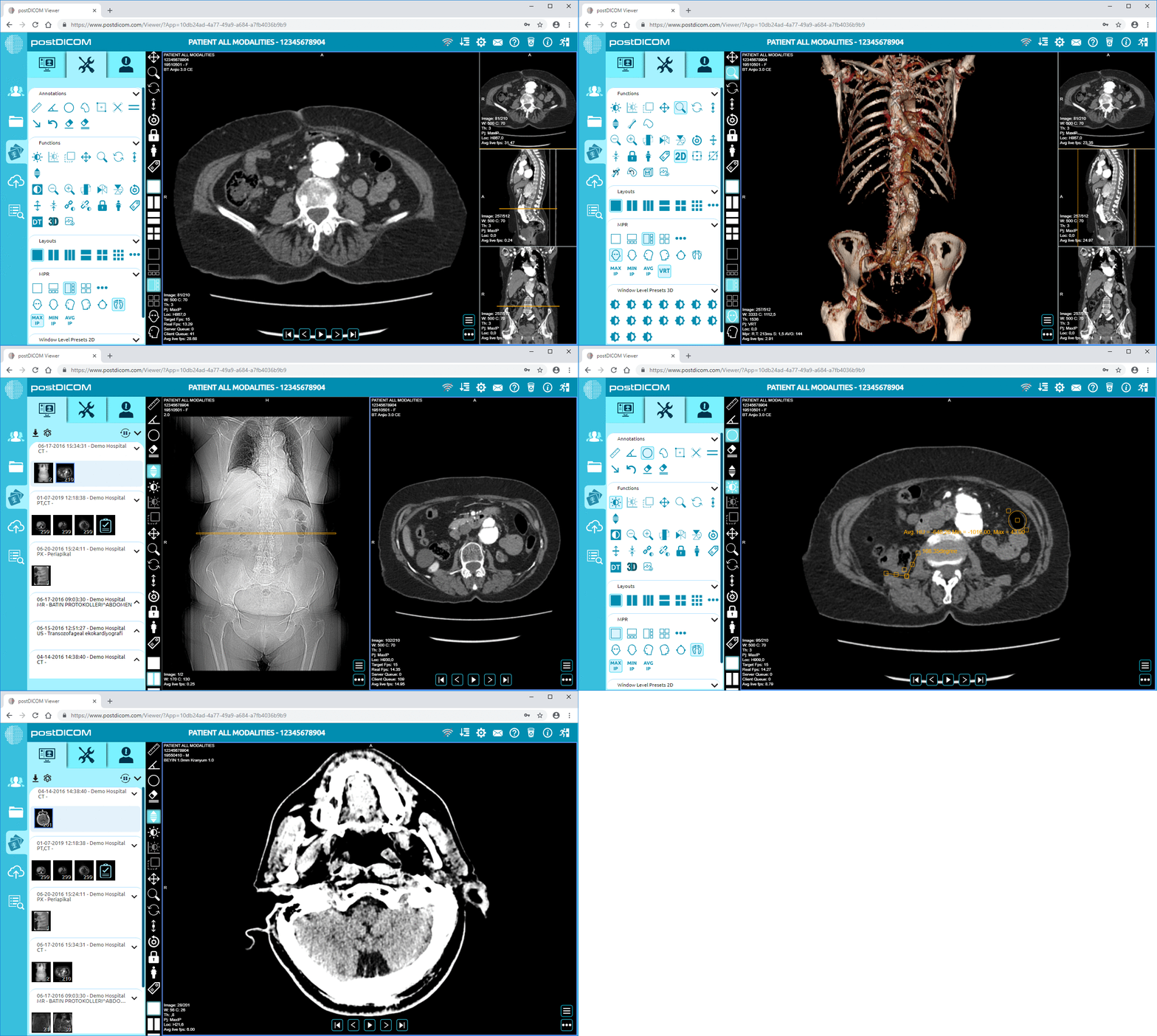
Cloud PACS and Online DICOM ViewerUpload DICOM images and clinical documents to PostDICOM servers. Store, view, collaborate, and share your medical imaging files. |

