
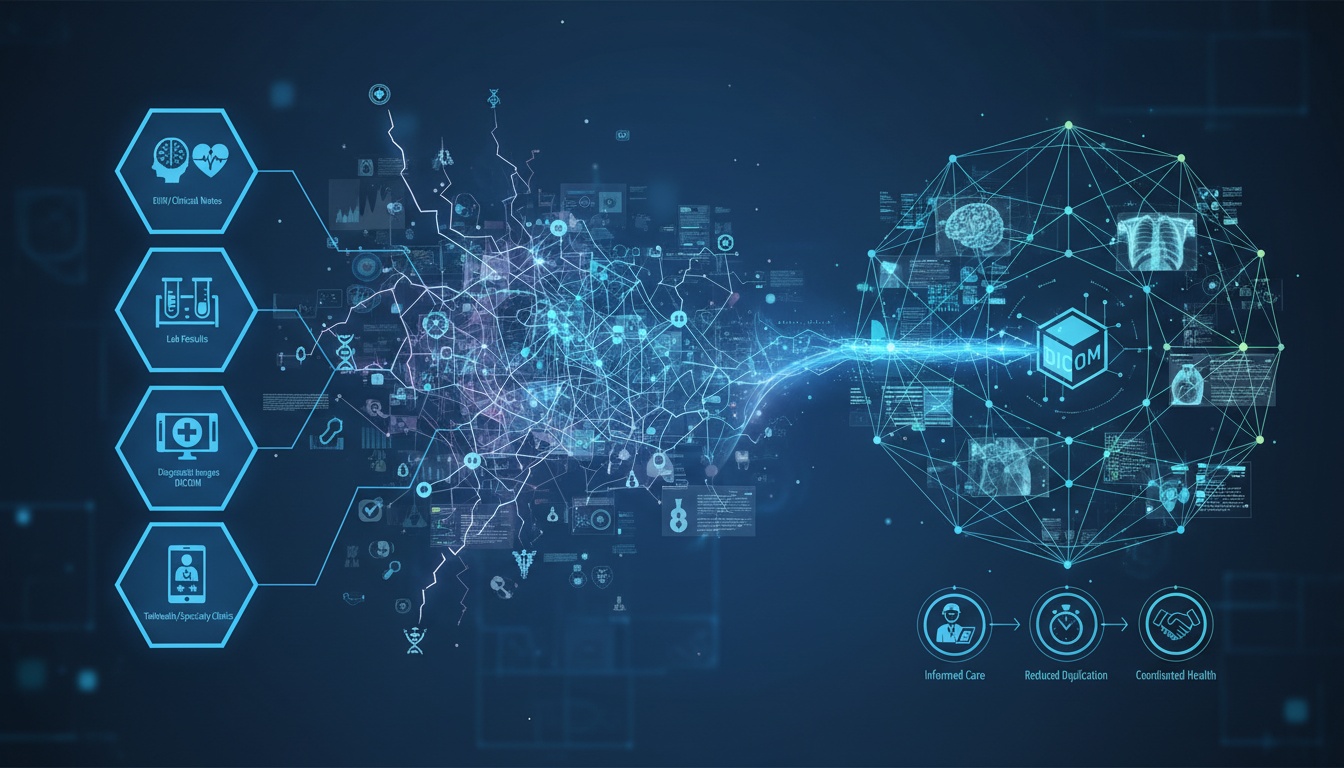
The distribution of healthcare delivery in North America has become more widespread. Patients often receive care from various providers in different hospitals, imaging centers, specialty clinics, and telehealth platforms. Yet the clinical information produced during these encounters -- electronic health records, lab results, diagnostic images, prescriptions and physician notes -- are often kept in silos that don't communicate with each other very well.
This fragmentation leads to one of the most intractable issues in modern healthcare IT - interoperability. When clinical systems are unable to share data seamlessly and interpret data effectively, physicians are left to practice with incomplete information, duplication in testing is more prevalent and coordination of care is adversely affected. For healthcare organizations who want to enhance clinical outcomes while managing operational costs, interoperability is no longer a technical convenience - it is a strategic requirement.
Electronic Health Record (EHR) systems have a central role to play in addressing this challenge. However, the real value of an EHR system is not established by its profiles of storing patient information. Its value is derived from its ability to efficiently communicate with other clinical systems, such as laboratory systems, radiology systems and imaging archives such as PACS. When these systems communicate via standardized protocols and APIs, healthcare providers are able to have a unified view of patient data to support faster diagnoses, better clinical decisions and more coordinated care delivery.
In recent years, initiatives for interoperability across North America have led to an increased adoption of modern integration standards such as HL7 messaging, FHIR APIs and DICOM-based imaging exchange. These technologies are changing healthcare architecture from being isolated software systems to connected clinical ecosystems where data flows safely between providers, departments, and institutions.
Understanding how interoperability works - and how EHR systems integrate with imaging infrastructure and other clinical platforms - is critical for healthcare organizations planning the next generation of digital health environments.
• Interoperability Is The Key To Coordinated Healthcare.when Clinical Systems Are Able To Share Data Seamlessly With Each Other, Physicians Will Have Access To Full Patient Records Across Departments And Institutions.
• The Actual Value Of An Ehr Is Integration.electronic Health Records Are Made Much More Powerful If They Can Communicate With Imaging Systems, Laboratory Platforms And Other Clinical Applications.
• Healthcare Interoperability Is Based On Standardized Protocols.technologies Such As Hl7 Messaging, Fhir Apis, And Dicom Imaging Standards Are Available To Provide The Framework For Safe Data Exchange.
• Radiology Systems Are A Significant Part Of Interoperable Care.integrating Pacs And Imaging Workflows With Ehr Platforms Ensures That Diagnostic Images And Reports Are Instantly Available For Clinicians.
• Modern Healthcare Architecture Is Becoming Api-driven.cloud Platforms And Web-based Imaging Systems Are Helping Make Healthcare Network Interoperability More Flexible And Scalable.
• Organizations Must Assess Interoperability Capabilities Thoughtfully In Terms Of Choosing Clinical Platforms.systems That Support Open Standards And Modern Api Offer Far Greater Long Term Value.
Healthcare interoperability is about healthcare systems working together. They share data in a way that makes sense. When systems can work together hospitals, clinics, labs and doctors offices can share information like medical history, test results, images and doctors notes.
Interoperability happens when systems use the rules to talk to each other. These rules are like HL7, FHIR and DICOM. They help different healthcare technologies, from companies communicate. This way all the clinical systems can connect to one system. Patient information can then move easily between departments and hospitals.
In terms interoperability means doctors can see a patients full record. It does not matter where the information came from. This helps doctors avoid doing the tests twice. It also helps them make diagnoses. They can work together to give care across different healthcare networks.
An Electronic Health Record (EHR) system is the digital backbone of the new clinical information management. At its most basic level, an EHR is an information technology intended to collect, store, and organize patient health data in a structured format that is accessible to authorized healthcare professionals across various departments and care settings.
Unlike the traditional paper records, EHR systems allow real-time access to patient history, laboratory results, medication records, diagnostic reports, and physician documentation.
From a clinical point of view, EHR systems support physicians in having a complete view of patient health over time. When implemented correctly, they enable healthcare providers to look back to previous diagnoses, monitor treatment plans and track patient progress over multiple visits. This longitudinal approach leads to better clinical decision-making and lets one less easily make decisions based on incomplete information.
From a technical standpoint, an EHR is the central data hub of a healthcare organization's digital ecosystem. Modern hospitals and clinics use dozens of specialized software platforms -- lab systems, radiology information systems, pharmacy management platforms and imaging archives. The EHR serves as the system to aggregate and organize the information created by these platforms so that the clinicians can access patient data through a single consolidate interface.
However, an EHR does not function independently. Diagnostic imaging results, laboratory test results, and medication updates must all be fed into the EHR in an organized and reliable way. Without interoperability between systems, the EHR is little more than a digital filing cabinet instead of a dynamic clinical platform, which can support coordinated care.
Implementing an EHR system is just the first step to digital healthcare transformation. The real value of an electronic health record platform is revealed when it can exchange information without problems with other healthcare technologies.
Healthcare delivery is a team sport. A single patient encounter may involve multiple clinical stakeholders - primary care physicians, radiologists, laboratory technicians, specialists, pharmacists, and administrative staff. Each of these participants relies on different systems that are digital to perform their tasks. If these systems cannot effectively communicate, clinicians are left with fragmented data which exists within separate applications.
Interoperability is one way of meeting this challenge by allowing the exchange of structured and standardized data between healthcare systems. When interoperability is implemented effectively, clinical platforms will be able to send, receive, and interpret information in an automatic fashion. Laboratory results are made available in the patient's EHR soon after testing, imaging studies are available along with physician reports, and care teams can work together across institutions without having to rely on manual data transfer.
For healthcare organizations, interoperability is also a key factor in supporting operational efficiency by reducing administrative workload, minimizing data duplication, and enhancing the continuity of workflow between departments.
Healthcare interoperability has commonly been explained in 3 different levels. Each level incorporates a more sophisticated type of data exchange between systems.
Foundational interoperability is the most elementary type of system communication. At this level, one healthcare system may send data to another system, but the receiving system may not be capable of automatically understanding the meaning of the received data.
Structural interoperability adds standardized formats to how healthcare data is structured and transmitted from one system to another. Messaging standards, like HL7, specify how clinical data will be formatted in messages sent between systems.
Semantic interoperability is the ultimate level of healthcare data exchange. At this level, systems are able to interpret the meaning of exchanged data consistently using standards such as FHIR and standardized clinical terminologies.
Healthcare interoperability is based on several standards that have been widely adopted to enable clinical systems to exchange data reliably.
HL7 messaging is employed extensively for the transmission of structured clinical information such as patient admissions, laboratory results, imaging orders and clinical reports between healthcare systems.
FHIR helps healthcare systems to interchange clinical data via their Rest APIs. This modern architecture enables applications like mobile health platforms, tools for telemedicine, and patient portals to be more flexible in interaction with healthcare systems.
DICOM is the worldwide standard for the storage and transmission of medical images. Modern additions such as DICOMweb give the ability to access imaging study through web technology and integration with cloud-based imaging.
Radiology workflows are one of the best examples of interoperability in healthcare IT.
A typical imaging work flow involves the following steps:
1. A Physician Sends An Imaging Order To The Ehr System.
2. The Order Is Passed To The Radiology Information System By Hl7 Messaging.
3. The Imaging Modality Developed Produces Dicom Images.
4. Images Are Saved To The Archive Of Pacs.
5. Radiologists Take Readings Of The Study With The Help Of A Dicom Viewer.
6. The Report And Images Are Made Available Through The Ehr.
When these systems are effectively integrated, clinicians can access imaging results along with laboratory data, clinical notes and medication histories.
Healthcare organizations are increasingly against with cloud-based imaging infrastructure like Cloud PACS to support scales and distributed imaging workflows.
Healthcare interoperability involves a multi-layer architecture that includes clinical systems, integration services, imaging infrastructure and clinical applications.
This layer includes such core healthcare platforms as EHR systems, HIS platforms, RIS systems, and laboratory information systems.
This layer contains HL7 interface engines, API gateways, data transformation services, and authentication mechanisms.
This is the layer that contains PACS archives and vendor neutral archives, cloud imaging storage, and DICOMweb services.
Clinicians have access to imaging studies through applications like web-based DICOM viewers, clinical dashboards, mobile healthcare applications, and telemedicine applications.
 - Created by PostDICOM.jpg)
This architecture enables healthcare providers to retrieve imaging data seamlessly while maintaining integration with EHR workflows.
Security and Compliance in Interoperable Healthcare Systems
Healthcare interoperability brings new security problems because patient information is being shared across different systems and institutions.
Healthcare organizations must deploy encryption, authentication, access control and audit logging mechanisms to ensure that patient data is protected during transmission and storage.
In the United States, the HIPAA regulatory context is used to enforce standards for protecting patient information. Canadian healthcare organizations use similar federal and provincial privacy regulations regarding the protection of medical information.
When considering an EHR platform, healthcare organizations should consider a number of interoperability capabilities:
• Support For Hl7 Messaging
• Support For Fhir Apis
• Integration With Pacs System
• Compatibility With Imaging Standards (e.g. Dicom)
• Scalability For The Cloud And Telehealth Environments
• Commitment Of Vendors To Open Interoperability Standards
Selecting systems backed by open standards will ensure that healthcare organizations can accommodate future technologies without substantial infrastructure changes.
Within the ecosystem of healthcare interoperability, clinical datasets produced by diagnostic imaging systems are causing massive amounts of clinical data to be integrated into patient files.
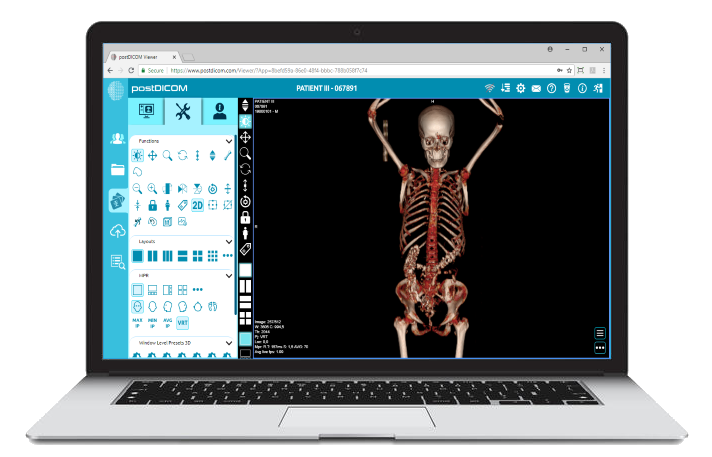
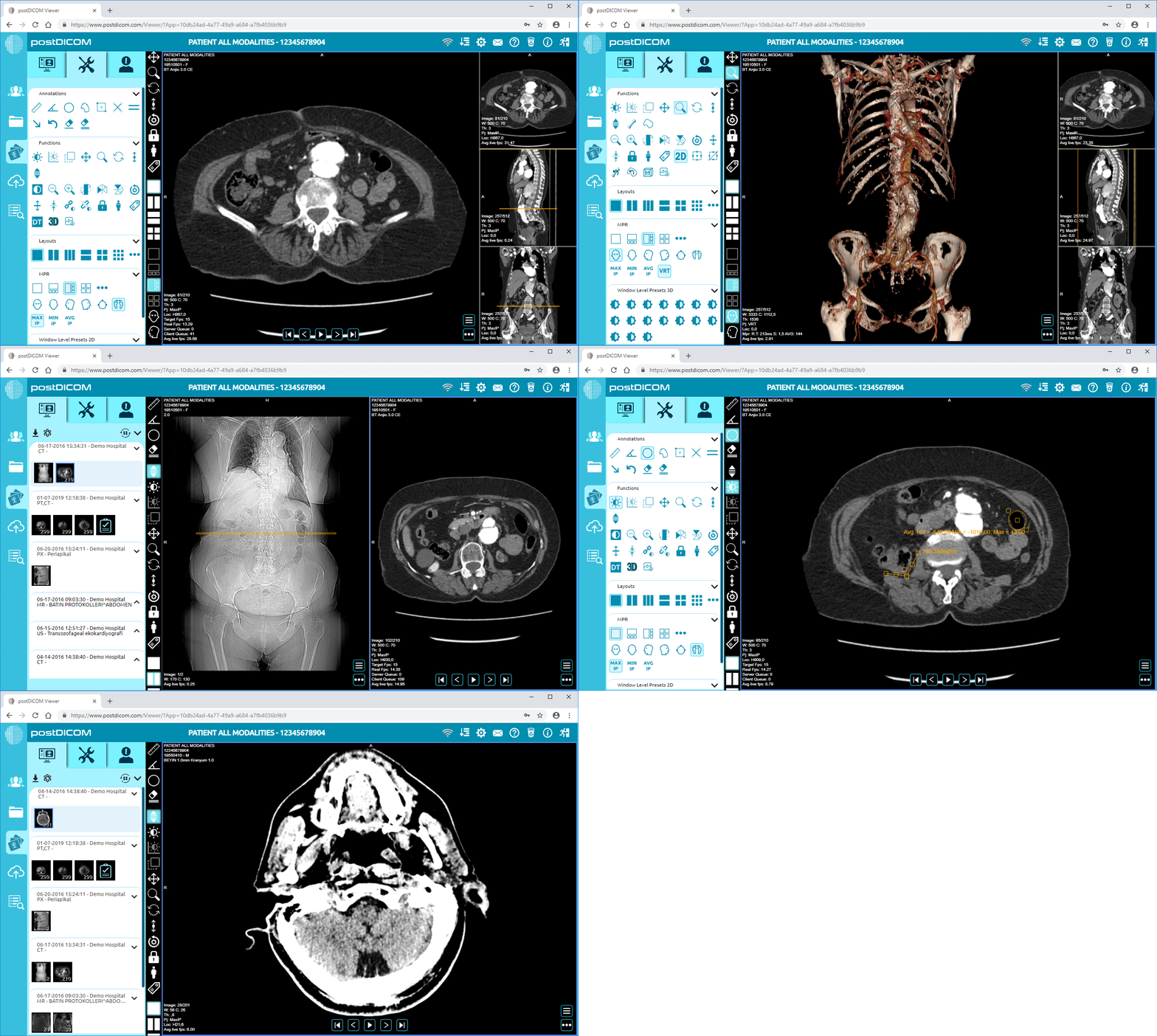
PostDICOM offers cloud-based PACS infrastructure for supporting interoperable healthcare environments. The platform supports the DICOM standard for storage and management of medical imaging studies and allows clinicians to access imaging data using secure browser-based viewing technology.
By supporting modern web technologies and standards-based approaches to integration, PostDICOM allows healthcare organizations to integrate imaging processes with the broader clinical systems that include EHR platforms, radiology reporting and telemedicine applications.
Across North America healthcare interoperability initiatives are still growing as governments and healthcare organizations look to improve data sharing between healthcare providers.
Cloud infrastructure, standardized APIs and patient-centered data access platforms are affecting the way clinical data is shared. Artificial intelligence and advanced analytics are also likely to benefit from large-scale interoperable data sets that will allow for better clinical insights and population health analysis.
As healthcare systems continue to modernize their digital infrastructure, interoperability will continue to be a foundational capacity in coordinated and efficient care delivery.
Interoperability is now one of the hallmark priorities of contemporary healthcare IT. As healthcare organizations are moving away from mobile islands of digital systems, and moving towards connected clinical ecosystems, the ability of technology platforms to exchange information reliably is critical to improving patient care and operational efficiency.
Standards like HL7, FHIR, and DICOM forms the basis for structured healthcare data exchange while contemporary integration architectures make clinical systems, imaging infrastructure, and cloud work as unified digital ecosystems.
Healthcare organizations who invest in interoperable technologies today will be better positioned in the future to provide coordinated, data-driven and patient-centered care.
Healthcare Interoperability is the capacity of various healthcare systems to share and comprehend patient information in a uniform and significant manner.
Interoperability enables EHR systems to integrate data from laboratories, radiology and pharmacy systems and other healthcare technologies to provide physicians with full patient records.
Key interoperability standards include HL7 messaging, FHIR APIs and DICOM imaging protocols.
EHR systems can connect with PACS using such standards as HL7 and DICOM so that imaging orders, reports and images can flow from radiology systems to the electronic health record system.
Cloud infrastructure allows healthcare organizations to store and share clinical data in a secure way within distributed healthcare environments for telemedicine, remote diagnostics and collaborative care.
|
Cloud PACS and Online DICOM ViewerUpload DICOM images and clinical documents to PostDICOM servers. Store, view, collaborate, and share your medical imaging files. |

